The first time I used a computer was in the early 80’s and I was pretty young– maybe 7 or 8 years old. My dad had a silver TRS-80 Color Computer Model 1 from Radio Shack that looked something like this, minus the fancy TV stand.
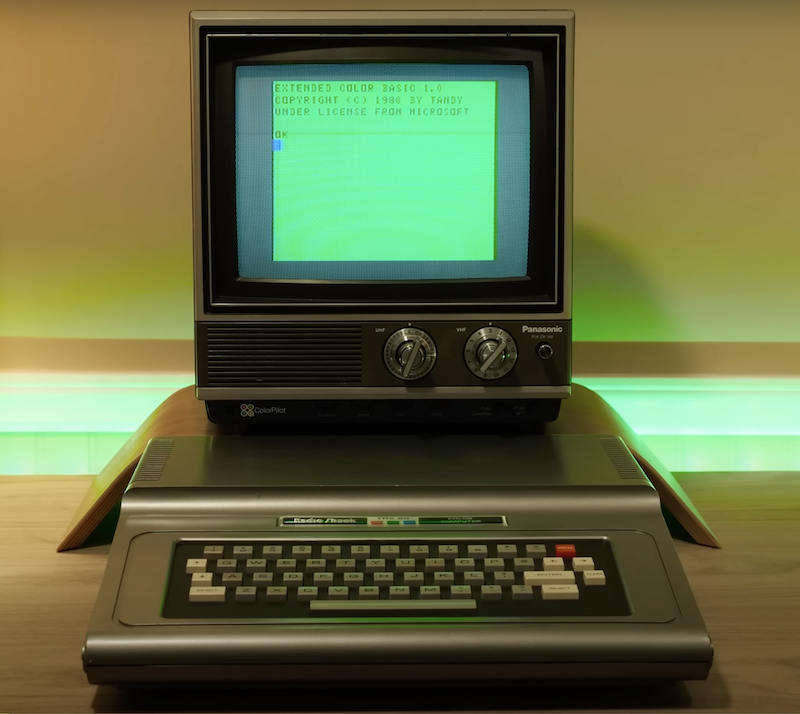
He owned a graphic arts studio, and had this computer at work (later we’d get one at home too– I was unbelievably lucky). Sometimes I’d go to work with him and my mom, and to kill the time I’d work through the user manual for this computer, Getting Started with Color Basic.

This still stands out as one of the best written computer manuals I’ve ever seen. It gave clear, helpful explanations that even a kid could understand.

And it let you know that it was ok to get things wrong, experiment, and try again. This is a lesson that’s served me well for decades in my career.
Actually, there is no “correct” Command line. For that matter, there is no correct way of handling your Computer. There are many ways of getting it to do what you want. Relieved…Good!

For our TRS-80 at home, we got a bunch of peripherals (again, lucky) including the cassette player, which let you load programs, joysticks, and a dot matrix printer. And we had a subscription to The Rainbow magazine. One of the best parts of this magazine as a kid, were the program listings for games. If you were willing to spend the time diligently typing in the code, you were rewarded with a game you could play, for free!

Of course, it was more likely that you’d have a typo which would mean hours of debugging your code, or sometimes debugging the magazine. Either way, it kept me enthralled, at least until I ran out of patience.
Amazingly, we also had a 300 baud modem and access to CompuServe, an online service.
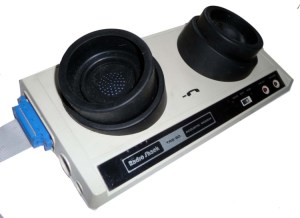
Showing this picture to my kids, I had to re-explain what a landline phone was, and have them guess how computer, modem, and phone all connected together. It looked something like this (though our computer was the TRS-80 shown above.)

To make things even more anachronistic, the phone in our basement near the computer was actually an old 1950’s payphone.

I’d take that old phone’s handset and push it into the rubber cups (acoustic coupler) of the modem. Then I’d load up CompuServe from a cartridge like this:
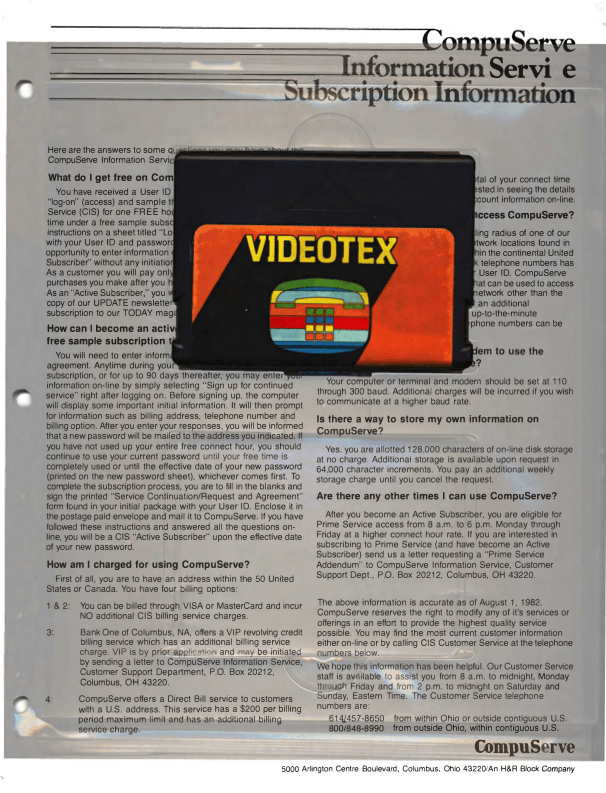
And a few minutes later, voila, I’d be connected to the world.
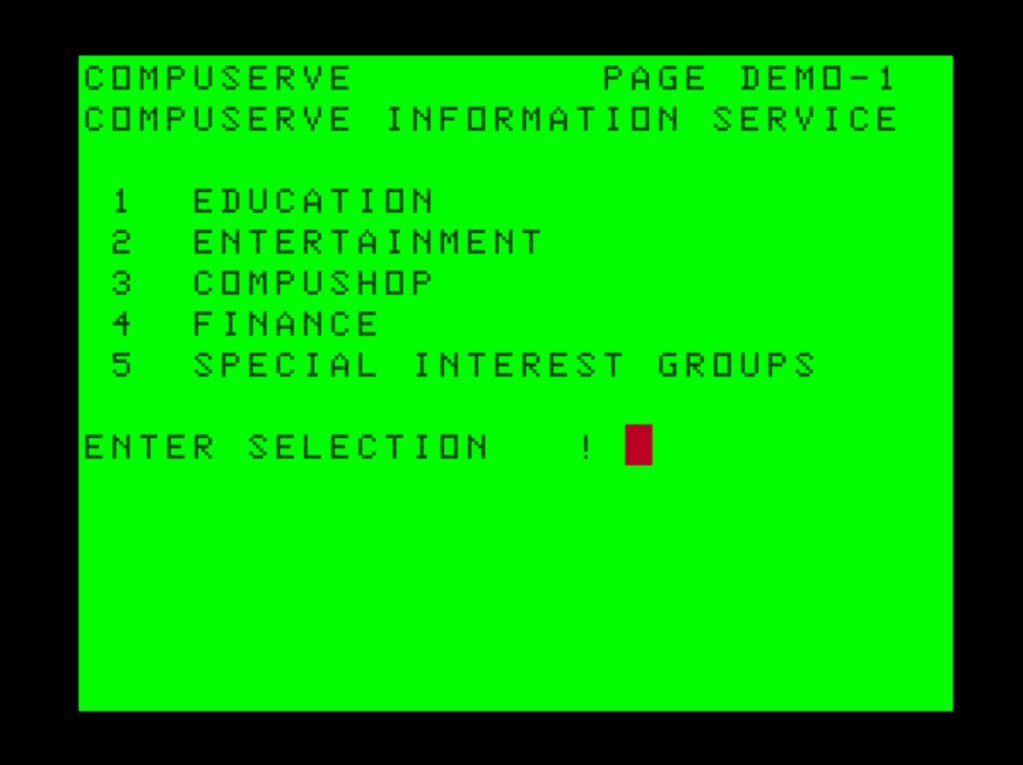
To be honest, there wasn’t much on CompuServe for a kid, and it was mostly just the idea of being connected to other computers out there somewhere that fascinated me. Also, given that it cost something like $5 an hour, getting “online” wasn’t a regular occurrence. I think my dad used it mainly for stock research and trading. It’s amazing to think that he was trading online 40 years ago.
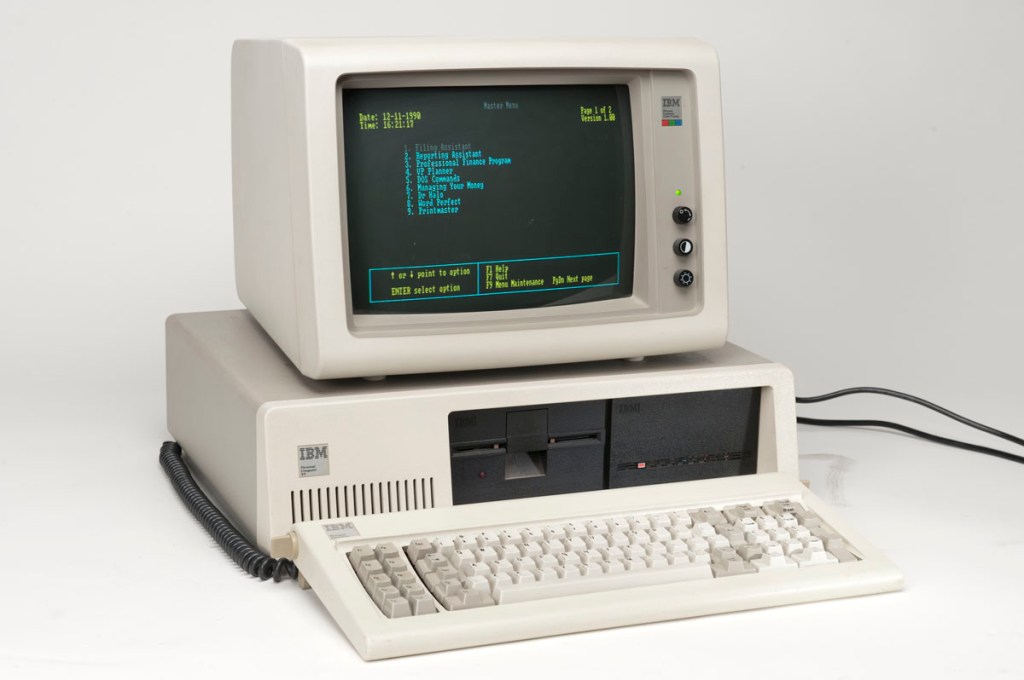
By the time I was in middle school, we had graduated from the TRS-80s to IBM PCs. Or more accurately to IBM PC compatibles. We started with an IBM PC XT, like this one, but pretty quickly swapped out all of its guts.
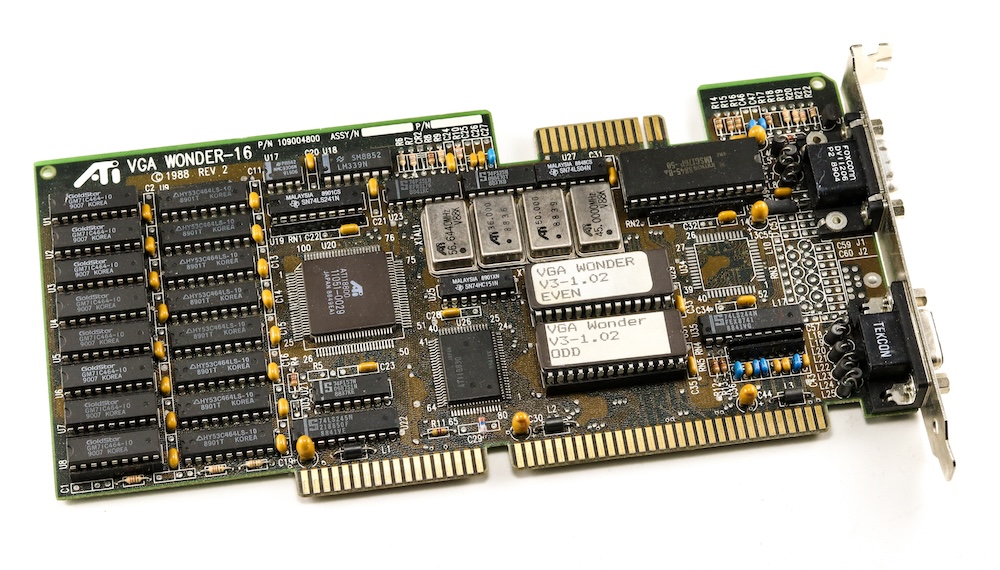
My dad and I would build and upgrade PCs from parts that we scrounged up at local computer expos. These events were typically held in the gymnasium of a local community college where rows and rows of vendors would be set up at folding tables, showing off their wares. Some of these were fancy booths, with vinyl printed signs but most felt more like a flea market with boards and parts thrown in to boxes and milk crates. You’d have to dig through them hoping to find something good like an ATI VGA Wonder graphics card with the bank of expansion memory on the left fully populated.
The one set of tables I remember being organized amongst the chaos were the shareware vendors. They’d have crates of 5 1/4 floppy disks, organized like records in a record shop, and I’d spend time flipping through all of them hoping to find a diamond in the rough. Most of what I got was actual shareware, like Tea Time’s Type Trek.

But sometimes there’d be demo or even full versions of games like Test Drive. For the commercial games, these must’ve been pirated copies but I’ll plead ignorance since I was a kid.

Not all of my games were pirated. I remember the Infocom text adventure games as some of my favorite Christmas presents.
Zork was amazing, and it wasn’t until much later in life that I learned about Zork’s history, drawing on inspiration from Colossal Cave Adventure. In both cases, some talented programmers built these games while also making significant contributions to computing. An interesting lesson in the relationship between work and play.

You are standing in an open field west of a white house, with a boarded front door.
There is a small mailbox here.
Having caught the shareware bug, I looked for ways to get more software without having to wait for the computer show. Enter Bulletin Board Systems (BBSes). You could think of these as precursors to web sites. These were servers, run by system operators (sysops) who were most often just hobbyists doing it for fun. They’d set up a dedicated personal computer running BBS software along with one or more modems attached to phone lines. As a user, I’d get on my computer with a terminal program and have it dial in to one of these dedicated phone numbers. I can’t quite remember how I got started, but I think I must’ve gotten my first terminal program and BBS phone number off of one of the shareware disks I bought at a computer show.
Thanks to my dad showing me how to use CompuServe, the BBS experience was somewhat familiar, just much more wild west. When I logged on to that first system I could see message boards, door programs, and the coveted shareware catalog I had been looking for, all free for the taking (as long as you kept your download/upload ratio in check). There was also a list of other BBS phone numbers… jackpot.
Lucky for me, north Jersey had a lot of BBSes to choose from, and I found several within my free calling area. Back then we used to have to pay for phone calls more than a couple towns away. Getting “online” with one of these involved a lot of busy numbers, redialing, cryptic looking terminal programs, memorized modem commands, and the high pitched squeal of modem handshakes (all recounted in BBS: The Documentary).
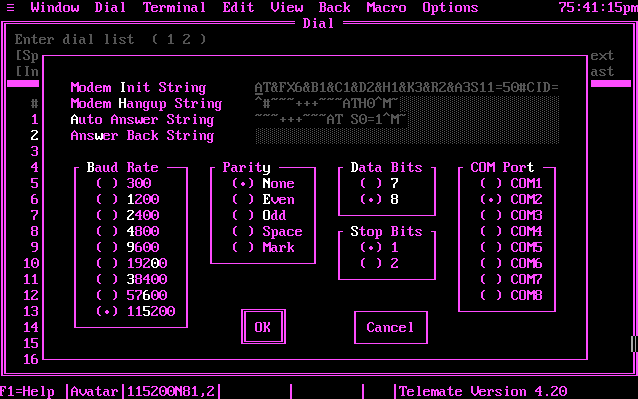
Not too long into my BBSing journey, I realized that with just a bit more legwork I could host my own BBS. I had the hard drive, and could just let others fill it up with shareware. I kicked the tires on a few different BBS programs, many of them shareware themselves and finally settled on Searchlight. It wasn’t the most popular, but it had an easy and “modern” interface for me as a system operator and for the most part it just worked. I left my dedicated phone line (again, lucky) connected to my computer, posted my number onto a handful of other local boards, and waited for the calls to come in … and they did! The Hangout BBS was alive. You can still see it’s entry on this historical list of 201 area code boards. As a user, it looked something like this:

My favorite aspect of running The Hangout was the ability for me, as a system operator, to watch users interact with the system. In retrospect, I guess this was a bit stalker-y, but it just amazed me that someone else was typing away on my computer. Searchlight, and most BBS programs, had a feature that allowed the sysop to drop into chat with the current user, and I would do that fairly regularly to say hi. I made friends online with another local Searchlight sysop who would occasionally dial in to my board and we’d chat and swap tips.
One thing I’m not proud of, and still regret to this day, is my one and only hacking expedition. I wrote a Searchlight BBS door program– I think it was a memory game– that I programmed an exploit into. When anybody else played the game, it worked like normal. When I played the game, and entered a secret code, it let me access the server’s command prompt. I used it once, I think driven by the sheer curiosity of whether it would work, and erased a “competing” BBS’s whole hard drive. This is the most malicious thing I’ve ever done in my computing career and though I never said it at the time, I’m really sorry; 35 years later this still knots me up inside.
On a more positive note, this experience of BBSing lead me to learn some new programming languages (which I used for less nefarious purposes). Pascal was the first “real” language I learned, and Borland Turbo Pascal was my first IDE.

I dabbled in C, but never really took to it at the time, and I was also the kind of kid who read the Microsoft MASM Programmer’s Guide at the beach for fun. BBS public message boards (both my own and others’) were a great place to learn and ask questions even if it took a day or two to get a response.
In high school, I got my first paid computer gig. The Want Ad Press was a local classified circular that needed a database. I had helped my dad setup a database for his work using dBase III Plus.
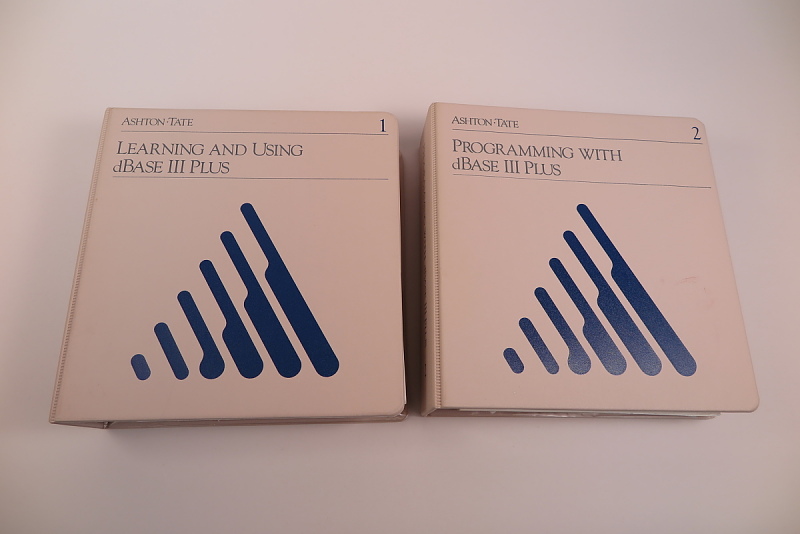
Actually, my dad’s office assistant taught herself dBase and set the whole thing up, and I was just there to make tweaks if she wasn’t around. But this gave me enough experience to feel like I could get a new database going on my own. I worked on it for hours setting up the schema, copied it over to a floppy, gave it to my dad to turn over to the client, and he gave me $50 cash. In hindsight, I wonder if that was real.
Other Fun Memories
A few other computer memories came to mind as I was writing this. One was a computer course I took as a kid (maybe at camp), where we “assembled”, or at least opened and inspected, a Timex Sinclair 1000.

What a wacky little computer. About the only things I remember about it were the crappy membrane keyboard and the thermal printer that either we had or someone in the course had. Everything was so tiny and compact (except for the giant 80’s TV it was hooked up to).
Speaking of compact, my dad had yet another Radio Shack product– the Tandy Pocket Computer 8. My dad even found a practical use for it– calculating reduction ratios for the large format copy camera in his studio.

It was programmable on-device, even though it could only display 1 line X 16 characters. Talk about finicky. It made programming my TI-85 feel like a walk in the park, with its 8 lines X 21 characters.

And finally, as I was walking down BBS memory lane, I came across Tradewars. I remember playing this game and thinking how amazing it was that we were all in this online world together.
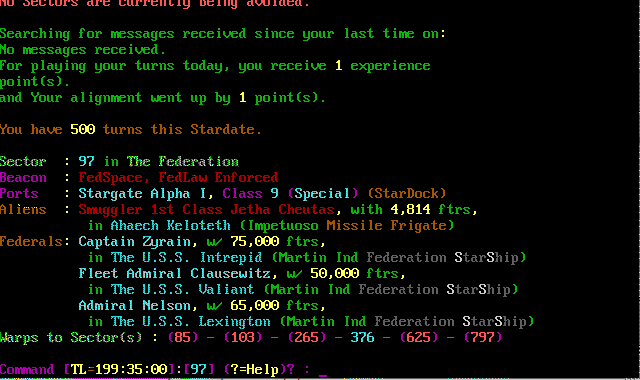
Released in 1986, this was one of the first online multiplayer games and even though I never got into modern MMORPGS, I can appreciate the engineering that goes into all of them.
Hidden Talents
Most of what I’ve written about above happened in grade school and middle school (from the age of 7 or 8 until about 13). Most of it I kept to myself, in part because I didn’t hang out with many kids who would get it, and in part because as I grew older I was really self conscious of my nerdiness. To me it was important to fit in and be liked and I often felt like the best way for me to do that was to hide all of my computer related hobbies.
By the time I got to high school, I was too busy with sports (running), girls, and friends to spend much time on computers. I’d still help my dad tear down and rebuild PCs for home and for his business. And I used a computer for writing school papers. But I shut down The Hangout BBS, stopped most of my coding activities, and ignored computers for a while.
Part of me wishes I had continued or even increased my pursuit of these activities. Maybe I could’ve been a college dropout teenage tech whiz if I had. But then I think about all the other things I learned in high school– how to make new friends, how to work, how to lead, how to train hard, and how to dance.
But throughout it all, the interest in computers was always there, and would occasionally get rekindled by something or other. One day I was wandering around our town library and came across a book called The Emperor’s New Mind by Roger Penrose. I’m still surprised that our small town library had this book, and that I came across it. As a teen I read it cover to cover, and was left with my mind tingling and churning. While the ending chapters didn’t make a lot of sense to me (or, apparently, to many others who have critiqued the book), I was fascinated by the introduction to computational theory that it provided. This was my first time learning about Turing machines, finite state machines, non-computability, and the halting problem. Not only that, but it was the first book I read that attempted to weave together computers, physics, and neuroscience as it explored the differences between human thought and computer algorithms.

All of these were areas that I’d explore more deeply in college and, as it turns out, they would shape my career in tech. But that’s another story.
Tying the Past to the Present (Wandering with Purpose)
As I write this post I am in year 25 of my career in tech (year 40 of my computing hobby), and I’m happily between jobs. I’ve got a few months of runway before deciding what to do next on my journey. At first I started straight in, trying to draft a mission and outline criteria for my next job. This had been a helpful step seven years ago when I made the transition into cloud and developer tooling specifically to “help people realize they can build anything they want” (my mission statement at the time). But trying to tackle this head on at this moment has proven to be futile… every mission statement I’ve drafted, including the previous one, has lacked the emotional charge I know it needs.
So I’ve taken another tack– wandering with purpose. What does that mean? It means open ended playing, exploring, and learning, but with an intention. My intention is to continue growing in fulfillment in my career– working day in and day out with exceptional people, building an environment where creativity, excellence, and mutual respect thrive and making a meaningful impact on the world. All this while supporting my family in their daily needs and their wildest aspirations.
That’s the “intentional” part; the “wandering” part means allowing myself to pursue anything of interest. Nine to five every day is filled with possibilities– it’s maker time; explorer time. I build whatever I want (like this IoT edge lab), but with purpose and focus. And even though I don’t know what the practical result of that building will be I pretend that it will matter. This approach lets me bring a different mindset to these tasks than I would bring to a hobby or entertainment.
One of the hardest parts of this approach is trusting that it will work; that the wandering will somehow fulfill the intention. But this reflection on my childhood helps. It was filled with wandering that was both playful and important (though only clearly so in retrospect). It was filled with safe-to-play and safe-to-fail experiences. It reminded me often that there was no one right path. It gave me constant feedback on my efforts. It was networked and connected.
On the down side, this reflection reminds me that I felt the need to hide large aspects of myself, my interests, and my personality. It took decades before I felt like I could actually be myself in front of others, and it’s still something I actively work on. But short of some grade school social awkwardness I’m lucky that the repeated lesson in life has been that the more I’m myself the more I realize my intentions.
 Jake Levirne's Blog
Leave a comment